Patient guide
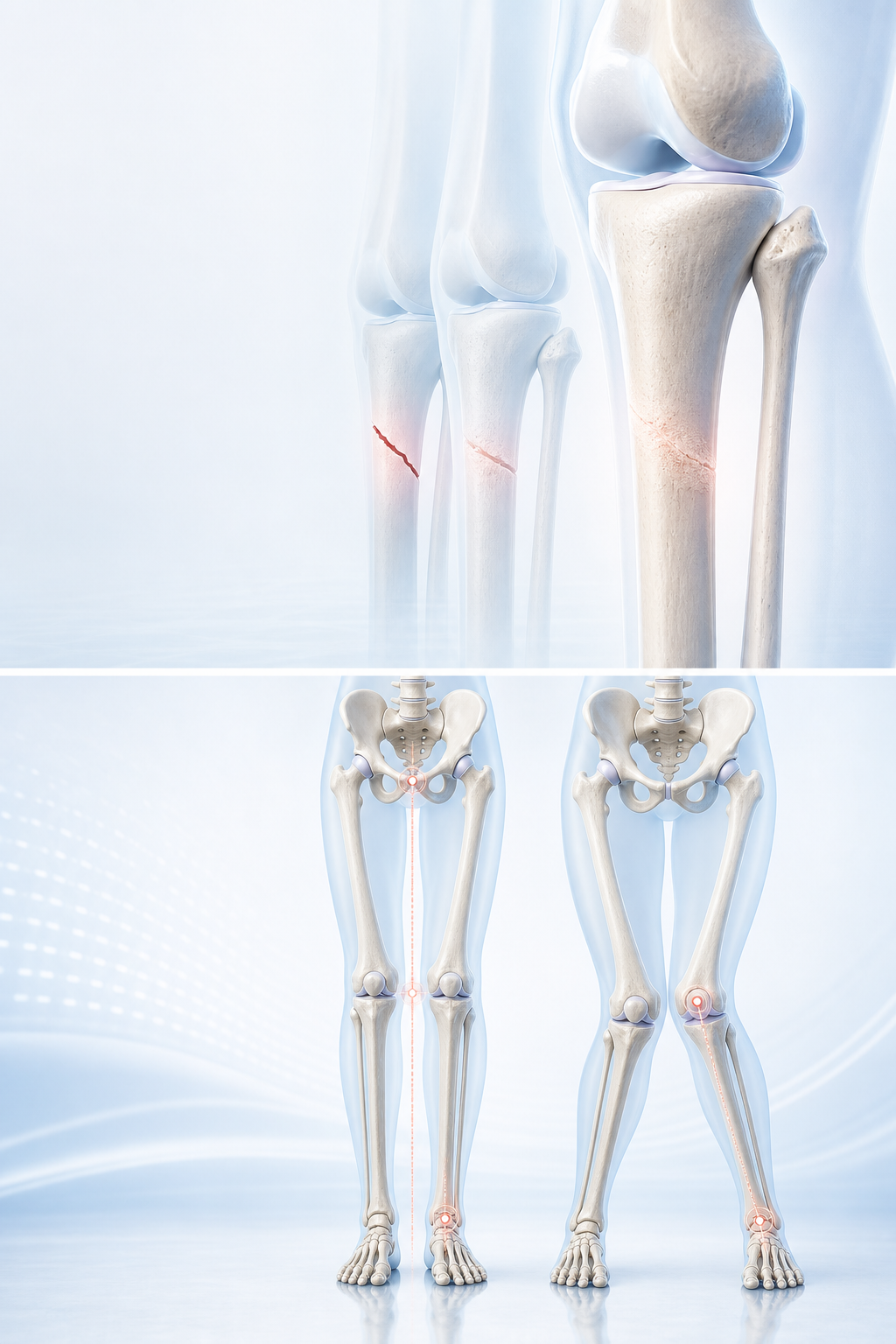
Alignment correction may be discussed when a defined deformity, symptoms, joint loading and functional loss fit together and reasonable alternatives have been considered. The operation and correction level depend on where the deformity originates and the condition of the joints.
Short answer
Alignment correction may be discussed when a defined deformity, symptoms, joint loading and functional loss fit together and reasonable alternatives have been considered. The operation and correction level depend on where the deformity originates and the condition of the joints.
This guide is provided by Dr Shaharil Orthopedic Specialist Clinic Seremban to help patients understand assessment and treatment choices before an individual consultation.
For the complete specialist pathway, conditions assessed and appointment information, read about limb alignment assessment in Seremban.
Start with the pattern that is actually happening
Alignment correction may be discussed when a defined deformity, symptoms, joint loading and functional loss fit together and reasonable alternatives have been considered. The operation and correction level depend on where the deformity originates and the condition of the joints. Ask what problem correction is expected to solve, where the bone would be corrected, what fixation is proposed and what non-surgical option remains.
A useful account also states what remains possible, what has become difficult and whether the problem is improving, stable or progressively more restrictive. Function turns a vague symptom into a clinical question.
Why the same symptom can lead to different diagnoses
Alignment is evaluated across the whole limb because the visual shape at the knee may arise from the femur, tibia, joint, rotation, leg length or foot posture. Static appearance and dynamic loading are related but not interchangeable.
For limb alignment correction, the timeline, location, load response and associated features matter more than a popular label. Similar-looking problems can need different protection, rehabilitation, imaging or follow-up.
What to record before the appointment
Ask what problem correction is expected to solve, where the bone would be corrected, what fixation is proposed and what non-surgical option remains. Add previous injuries, operations, medicines, new training or work demands and treatment already tried.
A short dated record is usually more useful than a long pain diary. Include swelling, stiffness, locking, instability, weakness, numbness, night symptoms and the effect on walking, sleep, work, driving or sport.
What a focused clinical assessment may include
A focused review may include standing posture, gait, hip and knee movement, rotational profile, joint stability, leg lengths, footwear and the location of tenderness. Both sides are compared and the effect on ordinary function is documented.
No single manoeuvre gives a perfect answer. Findings are interpreted together and checked against the movement or task that reproduces the problem, while urgent non-orthopaedic causes are considered when the history demands it.
When imaging adds useful information
When imaging is likely to change management, a properly positioned standing hip-to-ankle radiograph can measure the mechanical axis and locate a deformity. A short knee film or a photograph cannot provide every alignment measurement.
Ask which question the test is meant to answer and how each result would change the next step. The report and actual images should be matched to the side, location, timing and examination rather than treated in isolation.
How a proportionate care pathway is chosen
Care can range from observation and symptom-focused rehabilitation to a correction discussion in selected patients. Adult exercise can improve capacity and movement control but should not be advertised as a way to reshape mature bone.
The least invasive suitable option is often a sensible starting point when it is safe. That does not mean symptoms are dismissed: active care should have a goal, a dose, a time frame and criteria for progression or review.
What the decision should include
For limb alignment correction, shared decision making should cover expected benefit, important harms, alternatives, practical demands and what may happen if care is delayed or declined.
Tell the clinician which outcome matters most and which trade-off worries you. Work, caregiving, transport, finances, rehabilitation access and activity goals can change the most appropriate timing without changing the diagnosis.
Limitations that should remain visible
Not every alignment difference progresses, causes arthritis or needs surgery. Conversely, a small-looking difference can matter when symptoms, joint loading and function consistently point to it.
A responsible explanation separates what is known from what remains uncertain. It should not invent a guaranteed recovery date, imply that one option is always superior or turn a structural finding into a promise of benefit.
A practical two-week observation plan
Track limb alignment correction during ordinary life for up to two weeks if it is safe to wait. Record the trigger, location, duration, swelling or instability, recovery by the next morning and any change in function.
Stop the observation period and seek earlier care if red flags appear or function deteriorates quickly. Otherwise, bring the concise record to the appointment so the review can focus on repeatable patterns rather than one unusually good or bad day.
Plan the review point before leaving
Confirm what to do now, what activity is safe, who will explain results, how improvement will be measured and the date or trigger for reassessment. A monitored plan is different from being told simply to wait.
If progress stalls, review may reconsider the diagnosis, exercise dose, adherence, loading, imaging question or need for another opinion. Reassessment is part of careful care and does not automatically mean that surgery is the next step.
What current clinical guidance supports
Hospital for Special Surgery — Bowlegs supports matching clinical findings, function and appropriate investigation rather than making a treatment decision from one symptom or image alone.
EFORT Open Reviews — Radiological assessment of lower-limb alignment supports matching clinical findings, function and appropriate investigation rather than making a treatment decision from one symptom or image alone.
NICE — Osteoarthritis: assessment and management supports matching clinical findings, function and appropriate investigation rather than making a treatment decision from one symptom or image alone.
When to seek urgent care
Seek urgent care for deformity, inability to bear weight after significant injury, a hot red swollen joint with fever, a locked joint, rapidly progressive weakness or numbness, a cold or pale limb, chest pain or breathlessness.
Frequently asked questions
Can limb alignment correction be diagnosed from this article alone?
No. Diagnosis requires an individual history and examination; imaging is selected when it can answer a defined question or change management.
Do I need an MRI?
Not automatically. The most useful test depends on the suspected diagnosis, examination, earlier imaging and whether the result could alter care.
Does seeing an orthopaedic surgeon mean I need surgery?
No. Orthopaedic assessment includes diagnosis, non-surgical care, monitoring and referral as well as surgery for suitable indications.
Should I stop all activity?
Avoid unsafe or sharply aggravating movement, but complete rest is not always helpful. The safe level depends on diagnosis, severity and stage of healing.
How long should recovery take?
There is no universal deadline. Tissue, severity, health, treatment and functional demands affect progress; agree on milestones and a review point.
What should I bring to the appointment?
Bring a medicine and allergy list, actual images and reports, relevant treatment notes and a concise symptom or injury timeline.
Can I take pain medicine?
Ask a doctor or pharmacist what is safe, especially with kidney, stomach, liver or heart conditions, pregnancy, blood thinners or other medicines.
When should I seek help sooner?
Seek urgent care for deformity, inability to bear weight after significant injury, a hot red swollen joint with fever, a locked joint, rapidly progressive weakness or numbness, a cold or pale limb, chest pain or breathlessness.
Conclusion
Alignment correction may be discussed when a defined deformity, symptoms, joint loading and functional loss fit together and reasonable alternatives have been considered. The operation and correction level depend on where the deformity originates and the condition of the joints. The safest next step is a proportionate assessment that connects the problem with your health, goals and the evidence, together with a clear review plan.
Medical references
Let’s work out what comes next.
Tell the clinic what happened, what hurts and which movement has become difficult. The team can help arrange an appointment with Dr Shaharil.
WhatsApp for an appointmentThis information is general and does not replace an individual medical assessment, diagnosis or treatment. Seek appropriate care promptly if symptoms are severe, urgent or worsening.
Leave a Reply